Home > Our Blogs > Here is Everything You Need To Know About Mesh Sankranti 2026
Here is Everything You Need To Know About Mesh Sankranti 2026
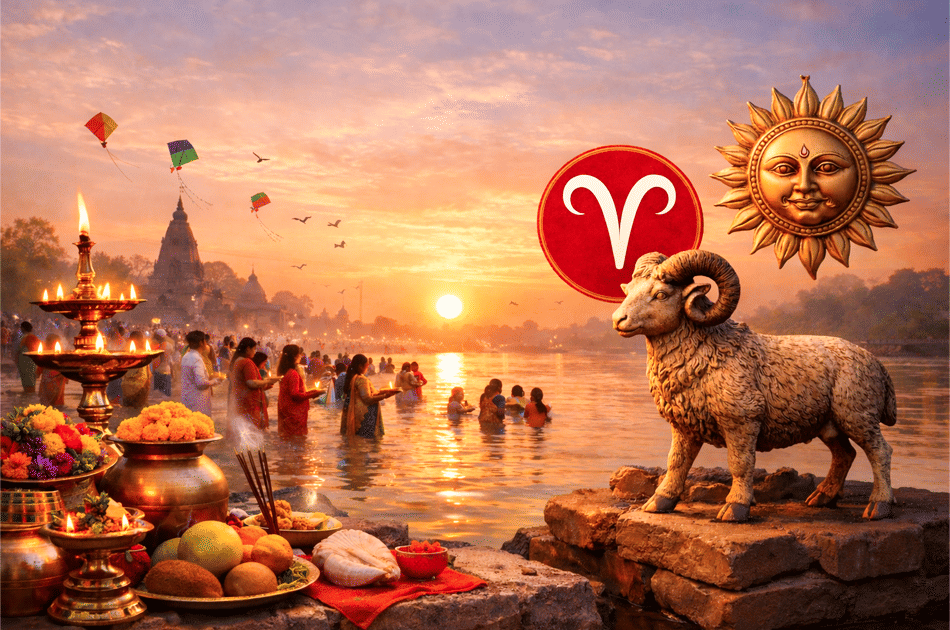
Mesh Sankranti 2026: Date, Time, Rituals and Significance
Mesh Sankranti, also called the Solar New Year, depicts the true “Spring Cleaning” of the soul. It is the time when the Sun enters the first sign of the zodiac. Read the following piece to know more about Mesh Sankranti 2026.
Mesh Sankranti: Tuesday, April 14 , 2026
Punya Kala: 06:09 AM-1:03 PM
Maha Punya Kala: 06:09 AM-08:27 AM
What Significance does Mesh Sankranti 2026 Day hold?
To understand the Solar New Year, you have to view the Sun not just as a star, but as the Atmakaraka, the soul indicator.
1) The Exaltation of Energy
The Sun is “exalted” in Aries. This means it attains its peak strength. Similar to a battery fully charged at 100%, the Sun’s ability to provide health, clarity and determination is at its maximum on this very day.
2) The Pulse of Agriculture
Maha Vishuva Sankranti generally coincides with the spring harvest. It is the time when farmers observe the “fruits of their labour”. A day of gratitude to the Sun for offering us the necessary light and warmth.
3) Spiritual Resurrection
Mesh Sankranti depicts the transition from the subconscious (Pisces) to conscious action (Aries). It is the day where the soul decides to take up a new form and commence a fresh journey.
Mesh Sankranti 2026 Rituals
Purification, Charity and Nutrition are the three foundations on which the traditional celebrations of Mesh Sankranti are laid on. Here is how the festival has been observed for over the years:
1) The Sacred Bath (Snana)
The day starts before sunrise. The most traditional way of celebrating it is by taking a dip in holy water like Ganga or Yamuna.
Known as the conductor of energy, water is believed to wash away karmic dust of the last year once you take bath in a holy river during the Punya Kala. If you do not find yourself near a river, add a few drops of sacred water to your bath at home.
2) Surya Upasana (Sun Worship)
Since Sun is the primary figure, the main ritual is Surya Arghya. One stands in the East direction and pours water from a copper pot toward the rising sun.
Besides a religious act, this is also an ancient practice (Sun Gazing) where a person looks at the Sun through the prism of falling water, which was said to heal the eyes and enhance the mind.
3) The “Satuaan Ritual” and Seasonal Ending
This day is often referred to as Satuaan in the heartland of India. Eating Sattu (roasted gram flour) mixed with jaggery or water is the original form of celebration.
4) The Charity of Coolness (Dana)
Sankranti is considered the most auspicious day for Dana (giving). People on this day usually donate items that help others get through the summer:
(i) Umbrellas and Shoes: These two articles protect the needy from the sun.
(ii) Hand Fans: To give relief from the extreme heat.
(iii) Earthen Pots (Ghadas): To provide cool water to tourists
Mesh Sankranti 2026: What This Astrological Shift Means for You
Since Sun depicts our “Atma” (Soul) and “Ahamkara (Soul), its entry into Aries is a time of self exploration
Fire Signs (Aries, Leo, Sagittarius): You will feel a major rise in confidence. This is the best time this year to set up a business or request a promotion.
Earth Signs (Taurus, Virgo, Capricorn): This transit lights up your sphere of “Resources”. You might discover new ways to manage money or find out a hidden talent.
Air Signs (Gemini, Libra, Aquarius): Your social life will blossom. Networking this day could result in a life altering partnership by the end of 2026.
Water Signs (Cancer, Scorpio, Pisces): This is your inner fire, intense and steady. It’s the moment for spiritual breakthroughs and emotional healing.
How is Mesh Sankranti 2026 celebrated across India?
One of the most amazing facets of Mesh Sakranti is how it changes its outfit based on which state you are in. It is the ultimate testament of India’s “unity in diversity”
1) The Golden Glow of Vishu (Kerala)
This day is Vishu in Kerala. First sight is on focus here. Families prepare the Vishu Kani, a magnificent golden cucumber, mirrors, coins, holy texts and yellow flowers (Konna).
2) The Ferocity of Baisakhi (Punjab)
In the North, it’s Baisakhi. This is a harvest festival of thanksgiving for the farming community. But for the Sikh community, it’s historical, marking the birth of the Khalsa. It is vibrant, loud and viewed as a celebration of the “warrior saint” spirit.
3) The Cooling Sip of Pana Sankranti (Odisha)
This day is observed as Pana Sankranti in Odisha. As the sun’s warmth deepens, the tradition is to hang an earthen pot with a hole at the bottom over a Tulsi plant. Water slowly drips out.
4) A Poetic Beginning: Poila Baisakh & Bohag Bihu
Poila Baisakh in Bengal involves opening the Haal Khata (new accounting books), while in Assam, Bohag Bihu is characterised by the air filled with aroma of lilies and the sound of the Pepa (a horn instrument ).


Comments
No comments yet. Be the first to comment!


Categories
Select Topic
- All Blogs