Should You Eat or Donate Rice on the Makar Sankranti and Shatilla Ekadashi Clash?
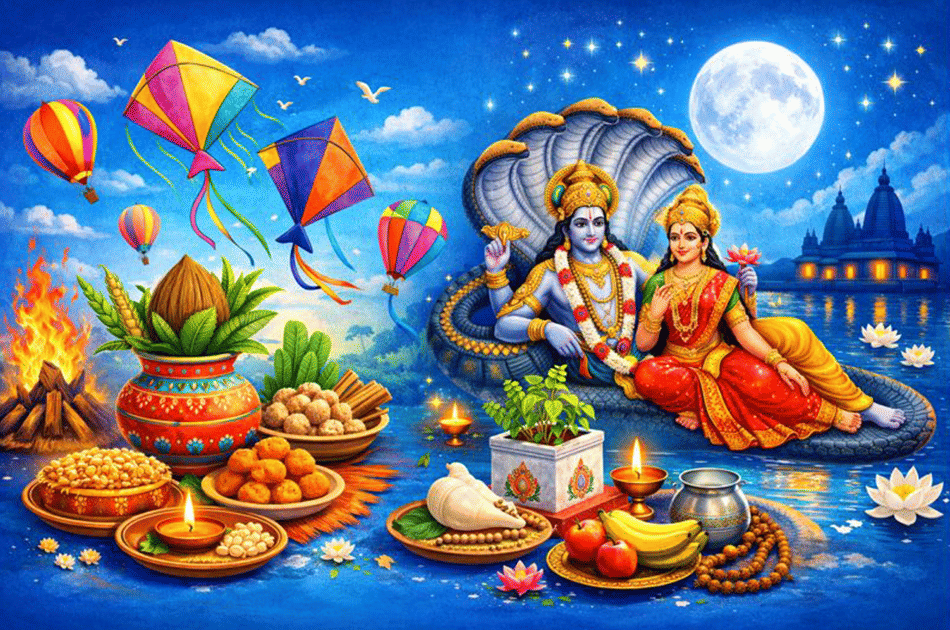
Makar Sankranti and Shattila Ekadashi on the Same Day: Should You Eat or Donate Rice?
As per the Hindu calendar, two of the most important festivals that have strict practices are falling on the same day. This is a rare incident where Makar Sankranti and Shattila Ekadashi occur together; people are confused about what to do and what not.
The most common question which in arising among the masses is – Should one eat or donate rice, or should it be avoided?
Let us understand this clearly based on traditional scriptures and religious practices.
Significance of Makar Sankranti
Makar Sankranti marks the transition of the Sun (Surya Dev) into Capricorn (Makar Rashi) the beginning of Uttarayan (Northward movement). This occasion is associated with auspicious beginnings and charity. Traditionally, it is expected to donate and consume items such as rice, khichdi, sesame seeds, and jaggery, which are considered divinely beneficial on this day.
Significance of Shattila Ekadashi
Shattila Ekadashi is the festival of worshipping Lord Vishnu and is one of the most crucial Ekadashi observances. On this auspicious day:
-
Consumption of rice is strictly prohibited
-
Sesame seeds are used for bathing, offerings, charity, and food
-
The fast is observed for spiritual purification and the removal of past karmic burdens
Ekadashi rules are considered strict and carry greater religious importance.
When Both Occur on the Same Day
When Makar Sankranti and Shattila Ekadashi fall on the same date, traditional methods state that the observation of Ekadashi takes precedence over festival rituals.
This means:
-
Rice should not be eaten/donated
-
Sesame seeds, jaggery, fruits, peanuts, and Ekadashi-friendly foods such as sabudana may be consumed or donated
-
Charity involving sesame seeds and clothes is considered auspicious
Eating or donating rice on Ekadashi is believed to reduce the spiritual merit of the vrat.
How to Receive Makar Sankranti’s Divine Blessings then?
We are not avoiding rice; we are just delaying it, and that doesn’t reduce the benefits of Makar Sankranti. One can still manage and follow the rituals:
-
Donating sesame seeds and jaggery
-
Offering water to the Sun God
-
Donating clothes or essentials to the needy
-
Also, worshipping Lord Vishnu and observing Ekadashi sincerely
Why Ekadashi Rules Come First
Makar Sankranti is the festival of the sun god, i.e. marked by the Sun’s transit into Capricorn at 3:30 PM, which begins Uttarayan. This makes it cosmically significant, as the Sun governs time, seasons, and life.
Shattila Ekadashi is an event that happens on the eleventh day (tithi) of each lunar fortnight. The Ekadashi tithi runs from 13 January, 3:21 PM to 14 January, 5:57 PM, and since Ekadashi is present at sunrise on 14 January, the Ekadashi fast is observed on this day. Therefore, rice consumption and donation are prohibited on 14 January. Sankranti-related grain or rice donation can or should be done on 15 January 2026.
This order respects both observances: Ekadashi vrat on 14 January, and Sankranti daan on the following day, ensuring full spiritual merit without breaking religious rules.


Comments
No comments yet. Be the first to comment!


Categories
Select Topic
- All Blogs