Understanding the fundamentals of Astrology and its rich history
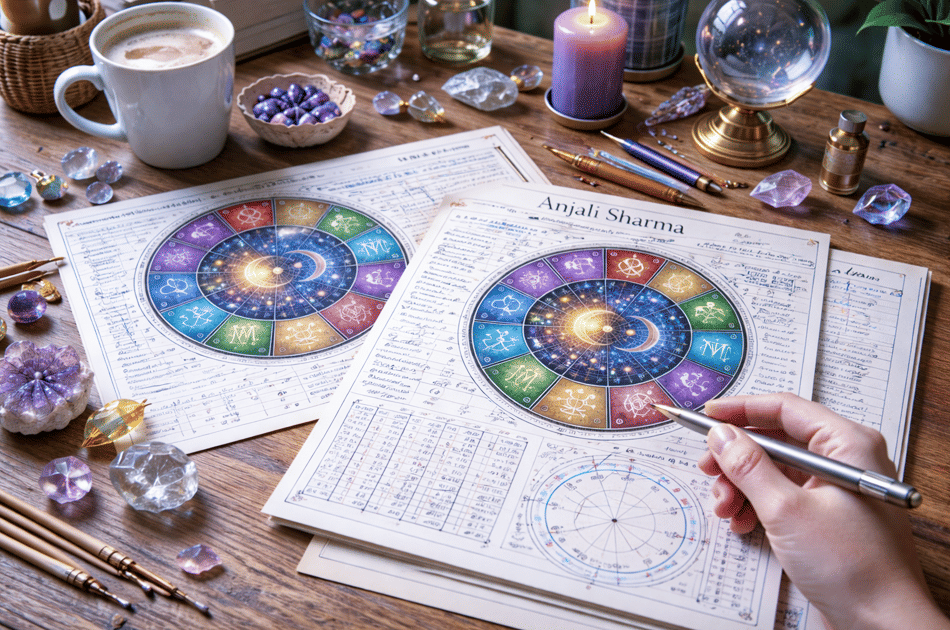
Astrology Simplified: What Your Birth Chart Really Means?
What is Astrology?
Astrology is a historic practice that detects the influence of celestial bodies on human life. The practice is developed over centuries into a refined system connecting planetary movement with human experience, character, and potential future. This guide offers the description, history, kinds and position of astrology in people’s lives.
The Meaning of Astrology
Astrology is derived from the positions and movements of celestial bodies, such as the moon, sun, planets and stars have an impact on human life and natural events. The historic practice of astrology is based on the supposition that the universe is united and that the positions of the planets regulate human behaviour, destiny and emotions.
It is important to note that astronomy and astrology are very different. While astronomy is a science that observes objects in space, astrology deals with how these objects influence the lives of people.
Brief History of Astrology
Astrology has been around for quite some time now. It has been practiced by various civilizations, such as Egyptians, Greeks, Indians, Babylonians and Chinese. They all had their unique type of astrology with the same concept, which is that celestial bodies determine earthly matters.
Babylonian Origins: The Babylonians initially formed a system of astrology in a scientific way around the 2000 BCE. They segregated the sky into twelve areas, which became the foundation of the zodiac.
Greek Influence: Astrology reached Greece during the 4th century BCE, where philosophers like Ptolemy further developed it and wrote the seminal work, Tetrabiblos, on astrology.
Indian (Vedic) Astrology: Also called Jyotish, Indian astrology is based on the Hindu culture. It employs a system of sidereal zodiacs and is believed to be strongly predictive.
Western Astrology: Inspired from Babylonian and Greek astrology, Western Astrology is based on a tropical zodiac system and depends on the seasons and the route of the Sun.
Types of Astrology
There are many branches of astrology, and each serves a different purpose. A few of them are very well known:
1) Natal Astrology- The widely popular form of astrology is based on an individual’s birth chart (horoscope), a chart of planetary positions at the time of birth and location.
2) Mundane Astrology- Mundane Astrology is used to forecast global events, political trends, natural calamities and economic variations.
3) Electional Astrology- It is used to decide the ideal time for key events like operations, investments or weddings.
4) Horary Astrology- Provides answers to specific questions as per the relative positions of the planets during the time of the question.
5) Psychological Astrology- Links psychology and astrology to understand an individual’s mind and emotional patterns.
6) Medical Astrology- Examines health and happiness through planetary connections and prescribes therapeutic intervention for conditions.
How Astrology has an impact on our lives
Astrology is also used for self discovery and personal growth.The following are a few ways how astrology impacts people’s lives:
(i) Understanding Character: A birth chart gives deep insights regarding an individual’s personality, strengths and weaknesses.
(ii) Predicting the Future Trends: Although astrology cannot promise any specific event, it can say if the times are auspicious or inauspicious.
(iii) Compatibility in Relationships: Astrology can detect compatibility between friends, lovers or business partners by examining their zodiac signs.
(iv) Career Guidance: Many believe astrology can be used to help in career planning by aligning occupations with planetary energies.
(v) Spiritual Awakening: Astrology fosters self exploration and identification with the universe, as well as guidance and calmness.
What does Science say?
Astrology has been criticised by astrologers for the lack of practical evidence and is purely based on subjective rather than scientific criteria. The Barnum Effect, a psychological effect where people will find vague and general descriptions as quite personal, explains why people identify with astrology readings.
But its advocates argue that its wisdom originated in centuries of pattern recognition and observation. Call it science, art or a spiritual discipline, astrology is an interest for people across the world.


Comments
No comments yet. Be the first to comment!


Categories
Select Topic
- All Blogs